


Every watercolor painting begins long before the first brushstroke, it begins with a choice of paper and a choice of brush. Get that pairing right, and the paint seems to do half the work for you. Get it wrong, and even a skilled hand fights the surface the whole way through. This guide walks through the main types of watercolor paper, the brushes that suit them best, and the habits that keep your washes clean and your details crisp.
1. Know Your Paper: Texture Is Destiny
Watercolor paper comes in three surface finishes, and each one changes how paint behaves the moment it touches the sheet.
Cold Press (NOT) is the all-rounder. It has a light, pebbled texture that grabs pigment nicely, holds enough water for soft blends, and still lets you pull out reasonably fine detail. Most watercolorists, beginner or professional, keep a pad of this on hand for everyday work.
Hot Press is smooth, almost velvety. Pigment sits on the surface rather than sinking into tooth, which makes it ideal for botanical illustration, fine linework, and anywhere crisp edges matter more than texture. The tradeoff: blooms, backruns, and hard edges show up more readily, so it rewards a confident, controlled hand.
Rough press is the opposite extreme, a pronounced, craggy texture that catches light beautifully and produces natural-looking granulation and broken color. It suits loose, expressive landscapes and skies far better than tight detail work.
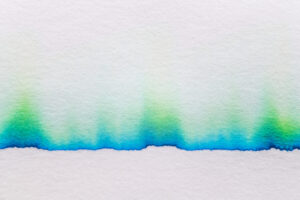
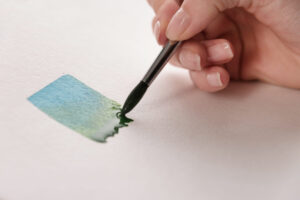
Weight matters just as much as texture. Anything under 190 gsm (90 lb) will buckle under wet washes unless it’s stretched first. For most work, 300 gsm (140 lb) is the sweet spot, heavy enough to stay flat through multiple wet layers without taping or stretching.
2. Know Your Brushes: Shape Follows Function
Round brushes are the workhorses of watercolor. A good round holds a fine point for detail yet swells to carry a generous wash, making it the single most versatile brush in the kit. Sizes 6, 8, and 12 cover the majority of everyday needs.
Flat brushes lay down clean, even bands of color and are excellent for skies, architecture, and sharp geometric edges, anywhere a straight line or a broad, controlled wash is needed.
Mop brushes, with their soft, absorbent bellies, are built for large, loose washes and for lifting color off the paper. They hold an enormous amount of water, which makes them perfect for wet-on-wet skies and backgrounds.
Rigger brushes are long and thin, designed for continuous fine lines, tree branches, grass, whiskers, rigging on ships (hence the name), anything requiring a steady, unbroken stroke.
3. Pairing Paper and Brush: Best Practice
The real craft is in matching the two. A mop brush loaded with water will overwhelm hot press paper almost instantly, pooling and bleeding past any edge you tried to hold. That same mop, though, is glorious on rough paper, where the texture soaks up the extra water and lets pigment settle into natural, granulated pools.
A rigger, by contrast, wants a smooth surface. Try to pull a fine, continuous line across rough paper and the texture will break the stroke into dots and gaps. Save rigger work, and any fine detail, for hot press or, at a stretch, cold press paper.
Cold press is the diplomat of the group. Because it splits the difference between texture and smoothness, it plays reasonably well with every brush type, which is exactly why it’s the recommended starting surface for anyone still developing a feel for how paint moves.
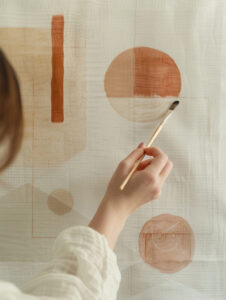
A few habits worth building early:
- Test on a scrap first. The same brush and pigment behave differently on different paper, always do a quick swatch before committing to the full sheet.
- Work light to dark. Watercolor has no white paint; the paper is your white, so reserve it deliberately from the start.
- Let layers dry between washes unless you’re intentionally working wet-on-wet, impatience is the most common cause of muddy color.
- Rinse brushes between colors, especially mops and rounds, since residual pigment dulls your next wash faster than you’d expect.
Final Thought
There’s no single “correct” paper or brush, only the right combination for the effect you’re chasing. Loose, atmospheric landscapes want rough paper and a thirsty mop brush. Tight botanical studies want hot press and a fine round or rigger.
Once you understand why each pairing works, choosing the right tools stops being a guessing game and becomes part of the creative decision-making itself.
By Mirna El Osta
Founder / Editorial Creative Director, Beirut Art Magazine
